

Summary
At the time the Grand Trunk Railway was built through modern-day Danforth in 1856, there were only a handful of small settlements nearby. The closest was the hamlet of Coleman’s Corners at the intersection of Dawes Road and Danforth Avenue, consisting of only a post office and a couple of shops and inns. The area became known as “Little York” as the local population grew, relating it to the nearby Town of York which is what Toronto was called until 1834. Company records and timetables indicate the existence of a station or flag stop shelter at Little York when the railway first opened in October of 1856, but all mentions of it cease by 1865.
The importance of Little York would greatly increase once the Grand Trunk decided to relocate some of its downtown yards further east in the mid-1880’s. Little York became the primary terminal for all of the Grand Trunk’s freight coming or going east of Toronto. In anticipation of future population growth and partly as a convenience for the railway employees, a passenger station called York was built opposite the freight yard and next to Main Street in 1883. A second main track was also laid between the Don River and the new freight yard the same year to facilitate the expected increase in traffic. The station itself was a rectangular wood-frame building with a hipped roof. At least compared to other stations built by the Grand Trunk near Toronto during this period, its design was relatively unique. A freight sorting yard capable of holding 420 freight cars opened in January 1884, including a 31-stall roundhouse with a 70-foot turntable.
On May 2nd, 1887, the Grand Trunk commenced its commuter service between Little York, Union Station, and Weston. These “suburban” trains arrived or departed Little York Station up to twelve times per day by 1890, making frequent stops at numerous locations on the way to Weston. It was reported that this particular service became fairly lucrative despite most suburban trains operating at a loss during the same period. Now at a population of approximately 5,000, Little York was amalgamated into Toronto in 1908. In 1922, just before the financially-ailing Grand Trunk was nationalized and merged into Canadian National, the station was renamed Danforth. The Danforth Roundhouse was closed and boarded up during the 1930’s, possibly due in part to the 1927 opening of Canadian National’s Spadina Roundhouse as well as economic downturn from the Great Depression. After sitting abandoned for many years it was finally torn down during or immediately after World War Two. As automobiles gained popularity throughout the early to mid 20th century, passenger ridership began to decline across the continent. At the local level, this was especially the case after the opening of Highway 401 just north of Danforth between 1947 and 1956. This highway served many of the same communities as the railway, incentivizing commuters to drive instead of taking the train. GO Transit commenced operations between Pickering and Oakville on May 23rd, 1967 to supplant the waning commuter service offered by Canadian National, and the original Danforth Station was adapted for this new service. GO continued to use the 1883 building until 1974 when it was finally demolished and a new one was built in its place.
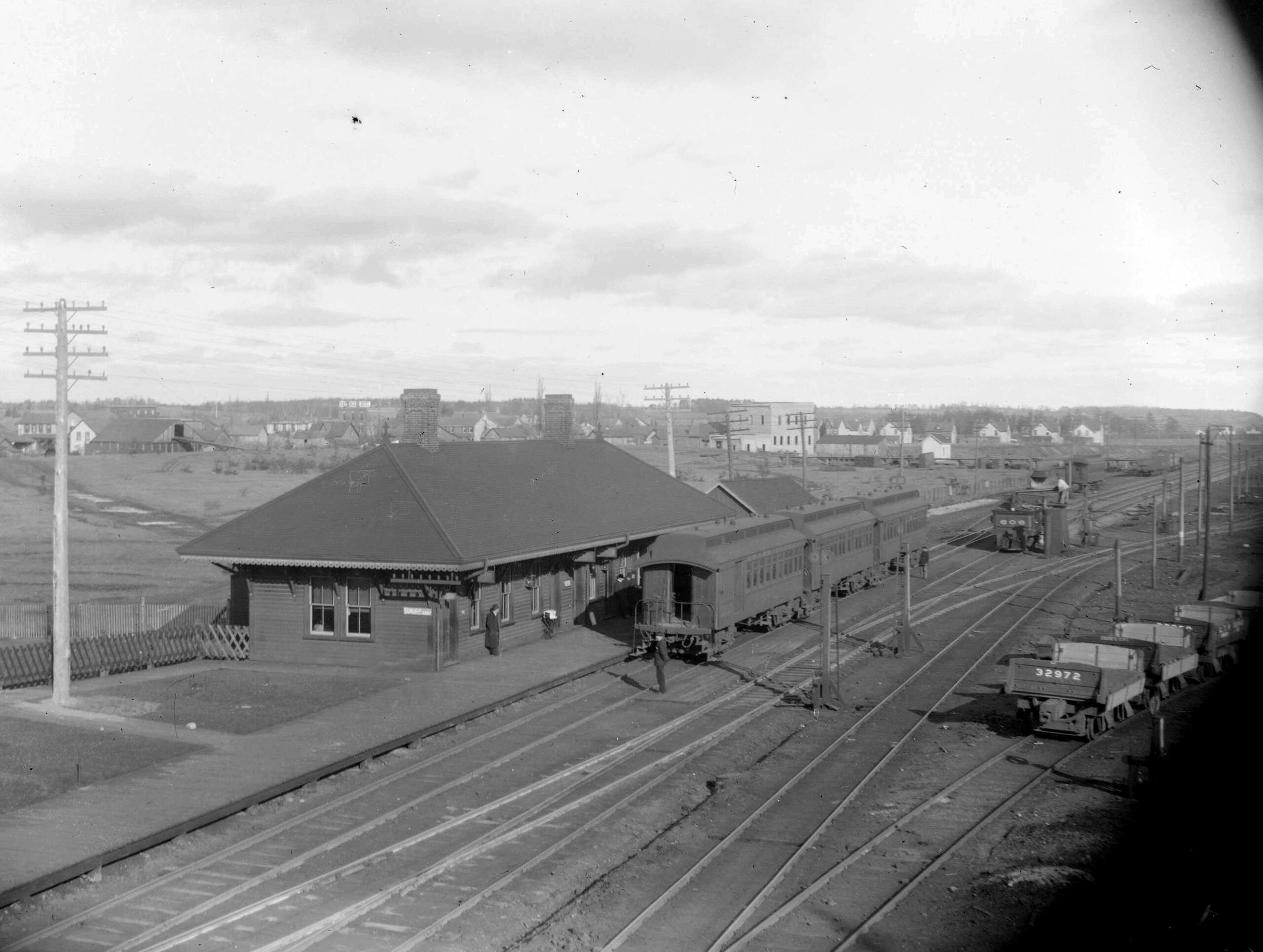
A photo of Danforth Station seen from the Main Street bridge looking east. It was dated circa 1890’s but appears to be from much earlier. Note the lack of signage or train order signals mounted to the roof. The locomotive and adjacent passenger cars in front of the station appears to be a suburban train laying over between trips. Courtesy of the Vancouver City Archives. 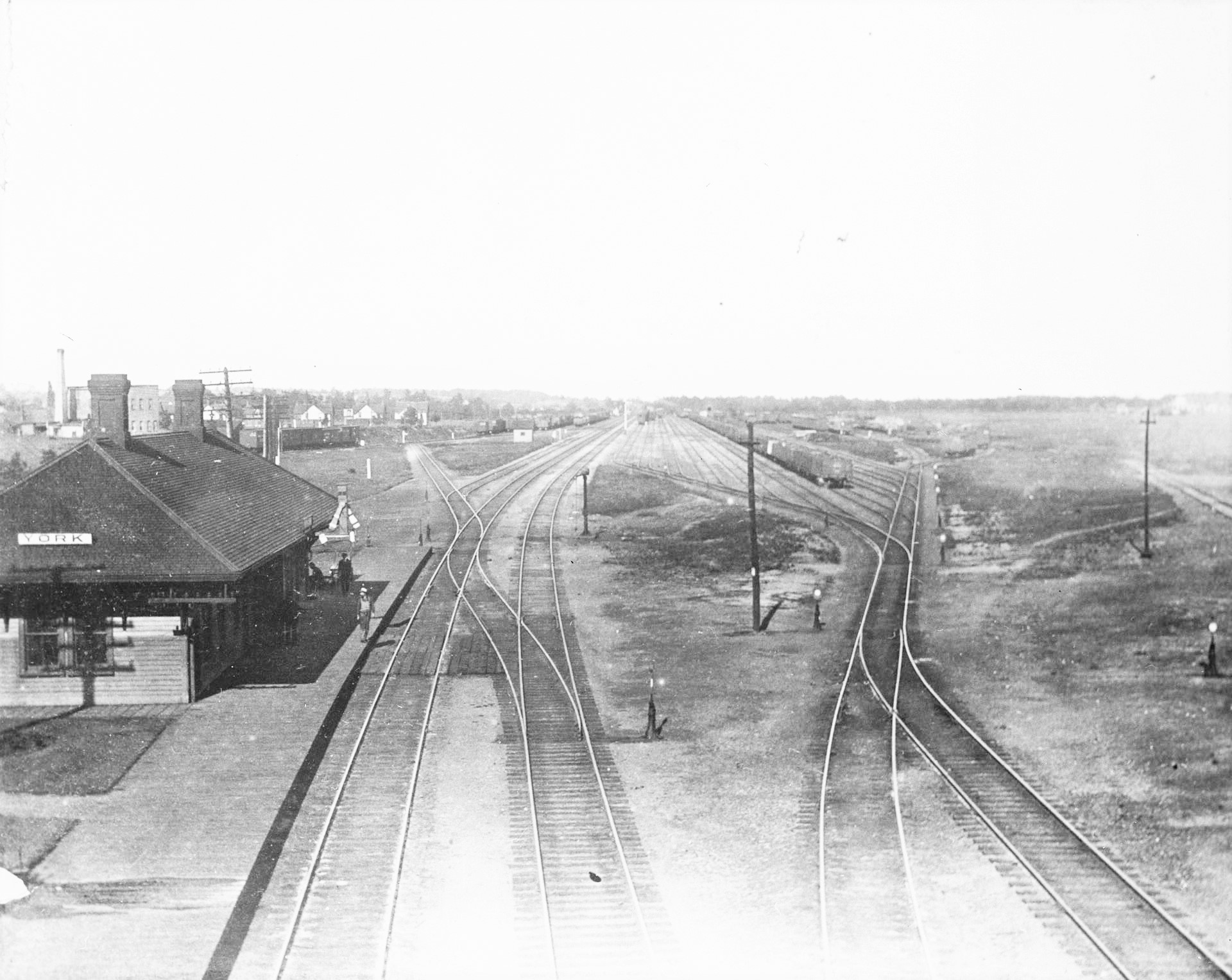
Another photo of Danforth Station from the Main Street Bridge, dating to 1889. The freight yard is visible on the right but the roundhouse is just out of frame. The extra-tall switch stands from the last photo have been replaced with low-profile ones. Courtesy of the Toronto Public Library. 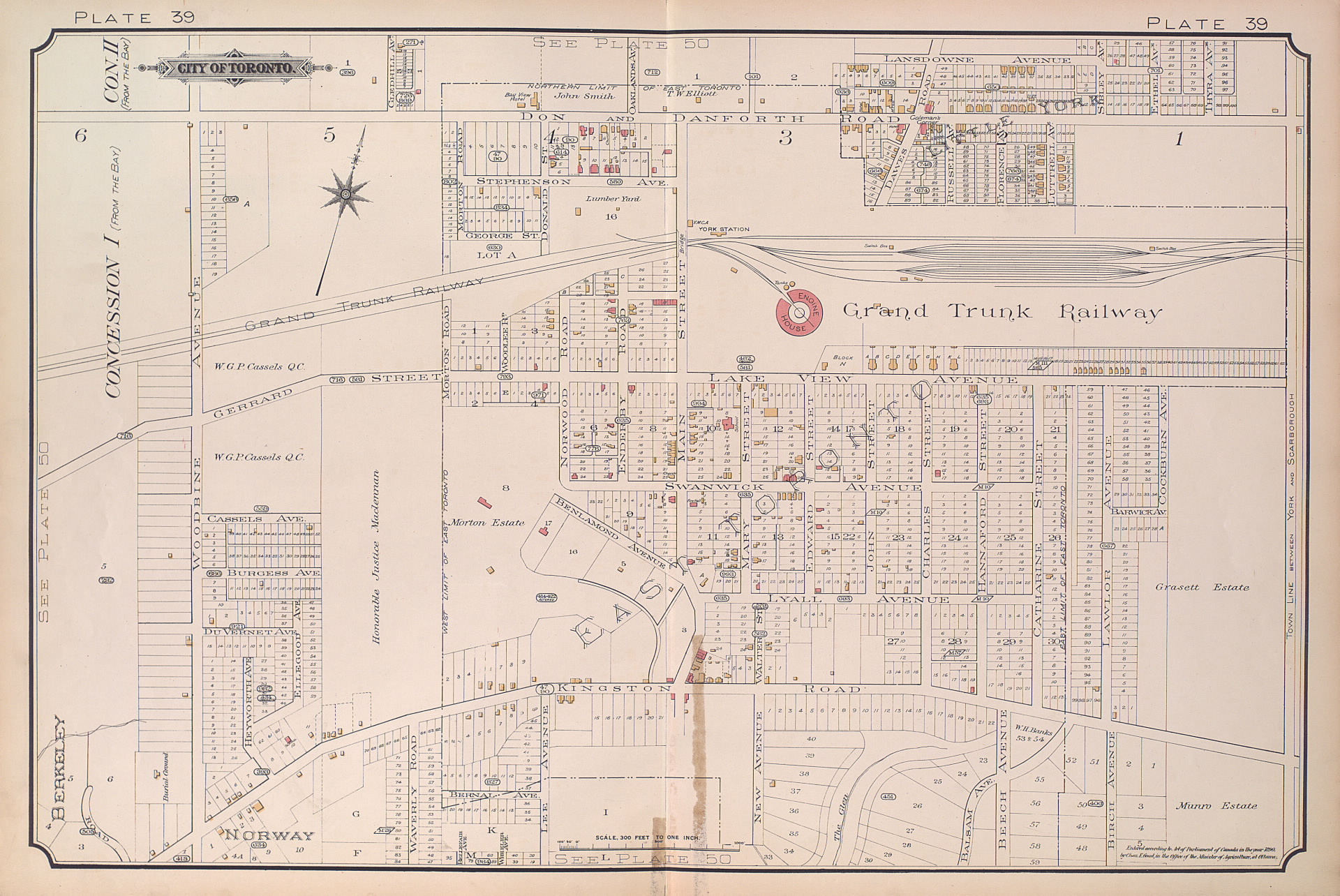
An 1890 fire insurance map showing the railway’s facilities at Danforth, including the roundhouse, yard, and station as well as a YMCA. 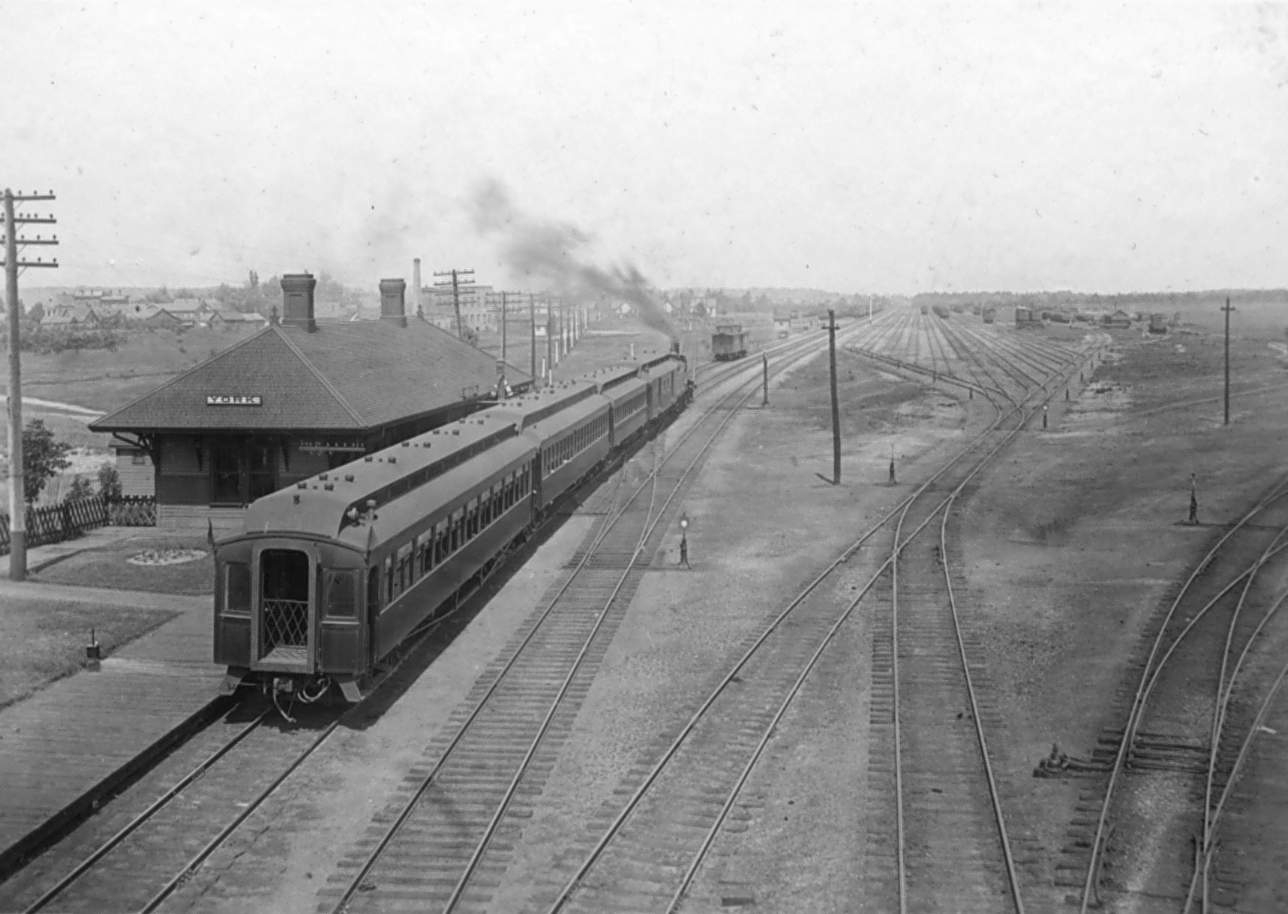
Another photo taken from a similar angle as the last one, this time dated July 1st, 1901. An eastbound passenger train with four cars is shown departing from the platform at the furthest left track. The Grand Trunk did not adopt right-hand running on double track until five years later. Courtesy of the Doug Montgomery Collection. 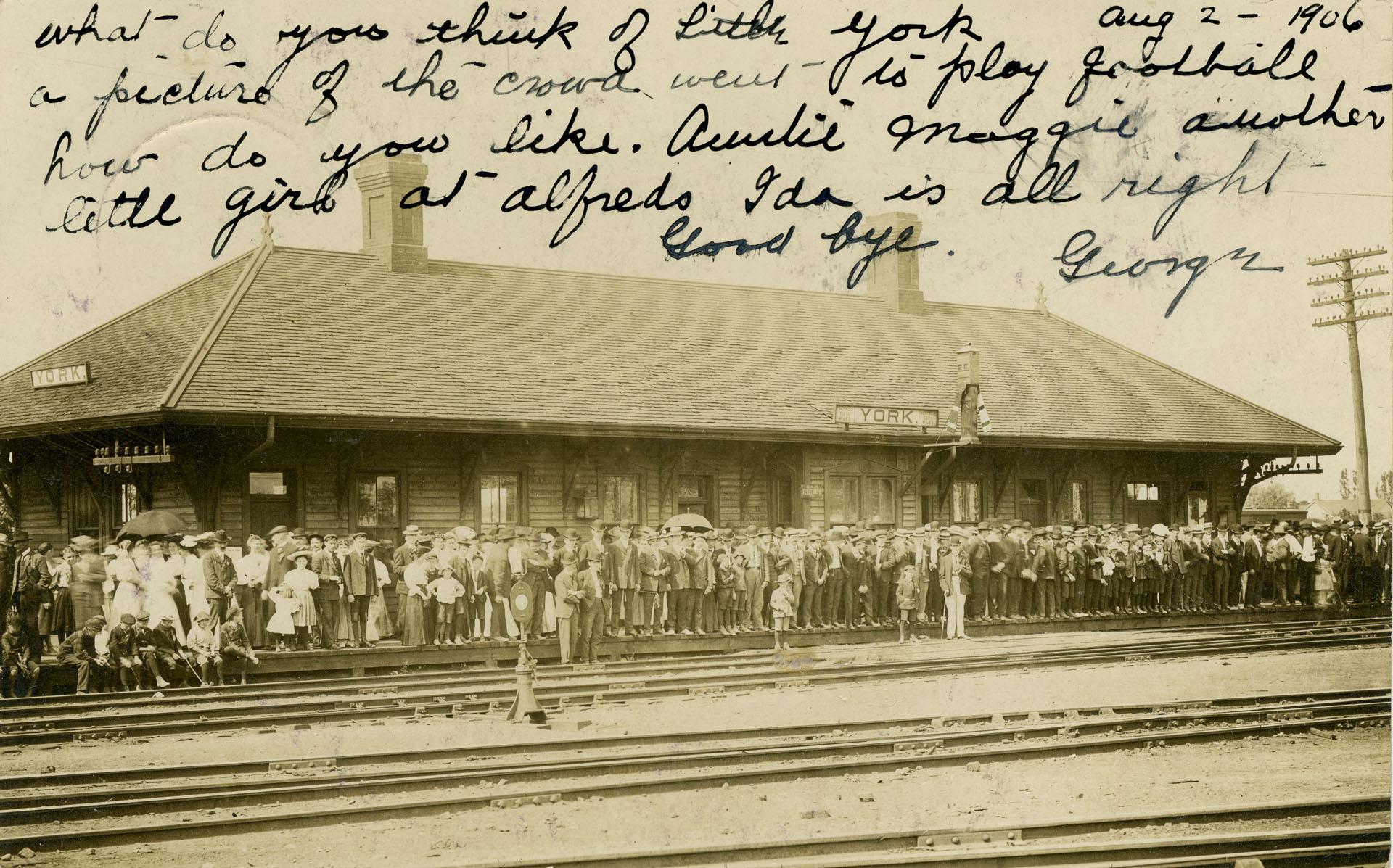
A large crowd of passengers await a train to a sporting event on July 25th, 1906. Here you can clearly see the exterior of the station building in detail, including the unique train order signals. Courtesy of the Toronto Public Library. 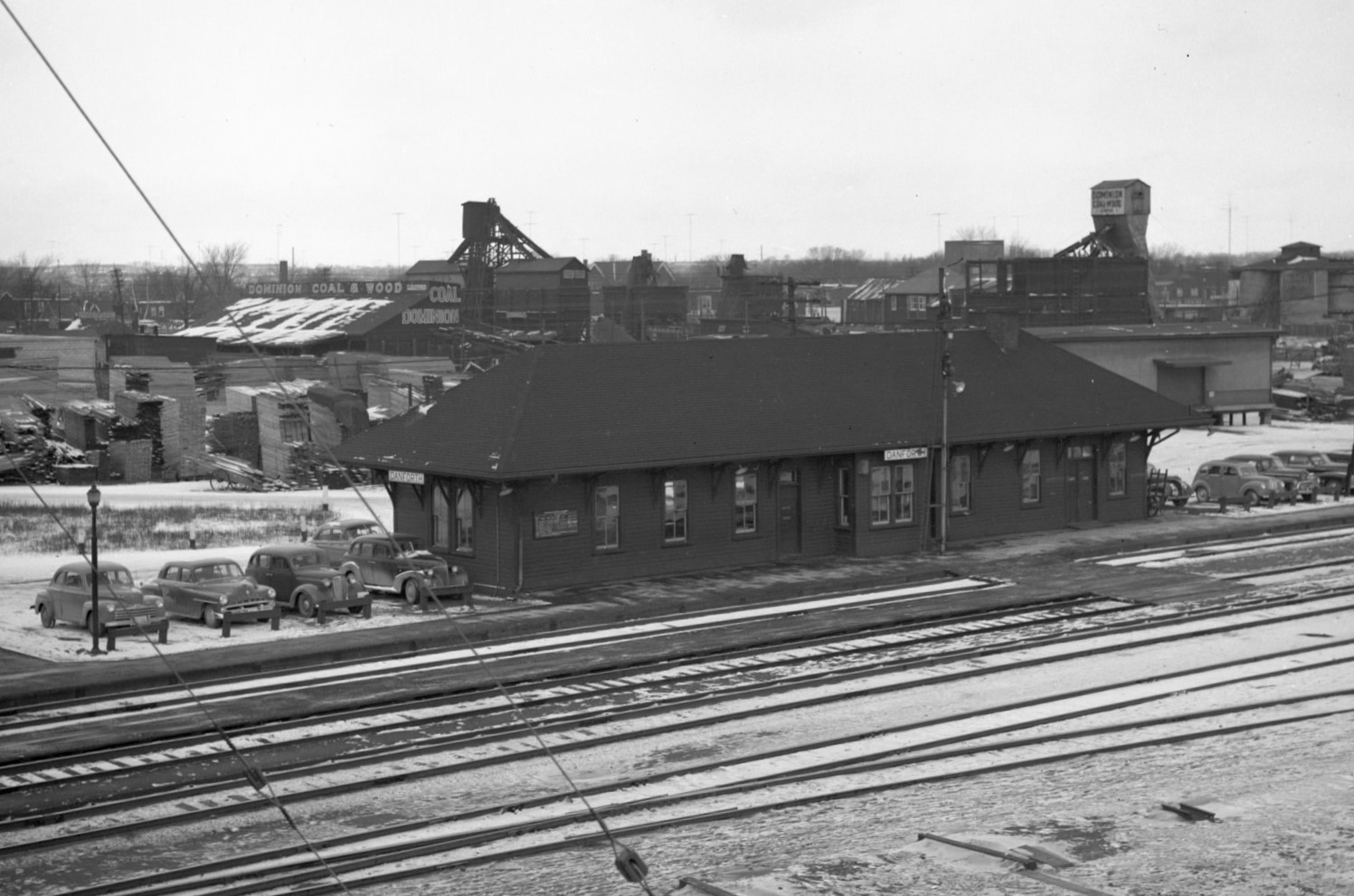
A January 1953 photo of Danforth station from the Main Street bridge. It appears to be wearing a darker coat of paint than before. Courtesy of the Toronto Public Library. 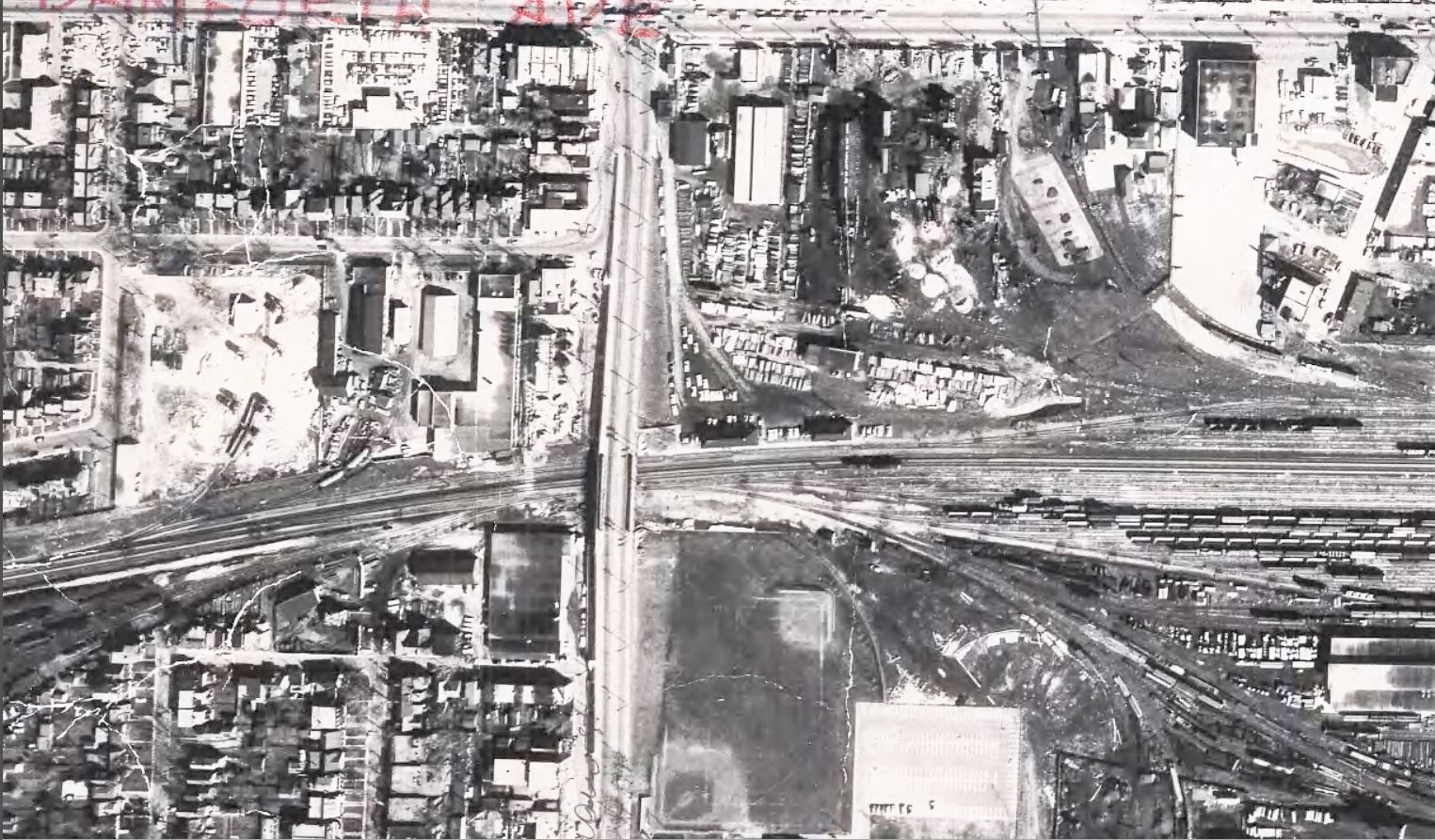
An aerial photo of Danforth station in 1960, showing some of the yard on the right. The concrete foundation of the old roundhouse can still partially be seen at bottom-right. Courtesy of the City of Toronto Archives. 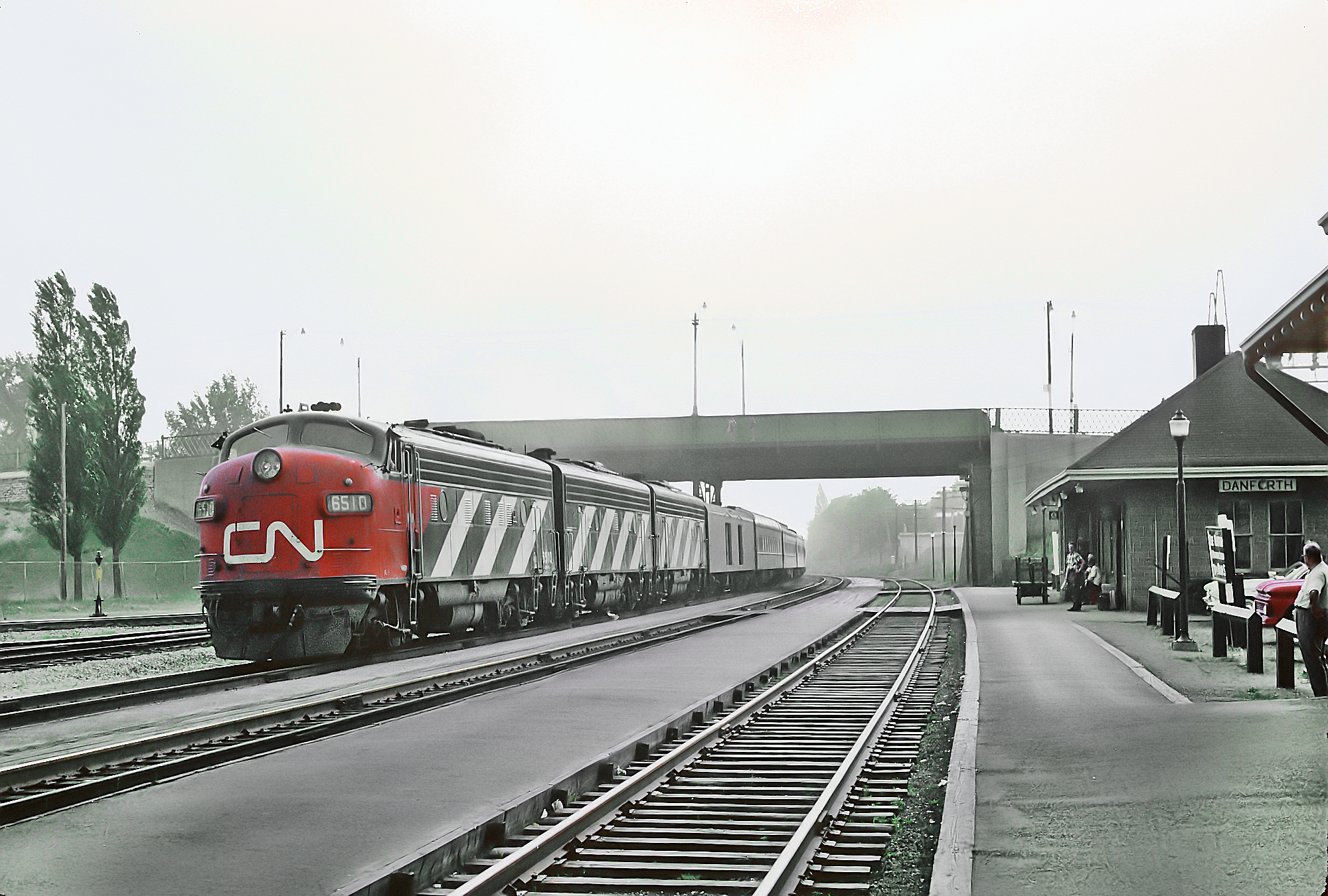
Canadian National’s eastbound Bonaventure passing Danforth Station on July 3rd, 1966. Photo by Roger Puta.
Condensed Station Info:
| Location: | Served By: | Current State: | Date Built: | Date Demolished: |
| East side of Main Street | Grand Trunk (1883 – 1923) Canadian National (1923 – 1967) GO Transit (1967 – 1974) | Demolished | 1883 | 1974 |