

Summary
The Credit Valley Railway was responsible for building the first railway station in Cooksville, which first opened on September 1st, 1879. While no photos of this station are known to exist, it was most likely a simple wooden structure not unlike other stations built elsewhere on the Credit Valley system around the same time. The Credit Valley line through Cooksville grew in importance when it was extended to St. Thomas, Ontario in 1881, offering connections to the United States via the Canada Southern Railway. Unfortunately, the original station succumbed to fire and a replacement was built by the Credit Valley Railway around 1883. The new station closely resembled others built by the Credit Valley during its later years of operations. It was a rectangular board-and-batten structure with a pitched roof and ornate carved wood beneath it at both ends. A gable protruded from the roof in the center of the building facing the tracks, and below it a canopy ran along the wall to provide shelter for passengers on the platform. Later the same year the Canadian Pacific Railway gained control of the Credit Valley through one of its proxies, the Ontario & Quebec Railway. By 1884, a total of six trains stopped at Cooksville on a daily basis.
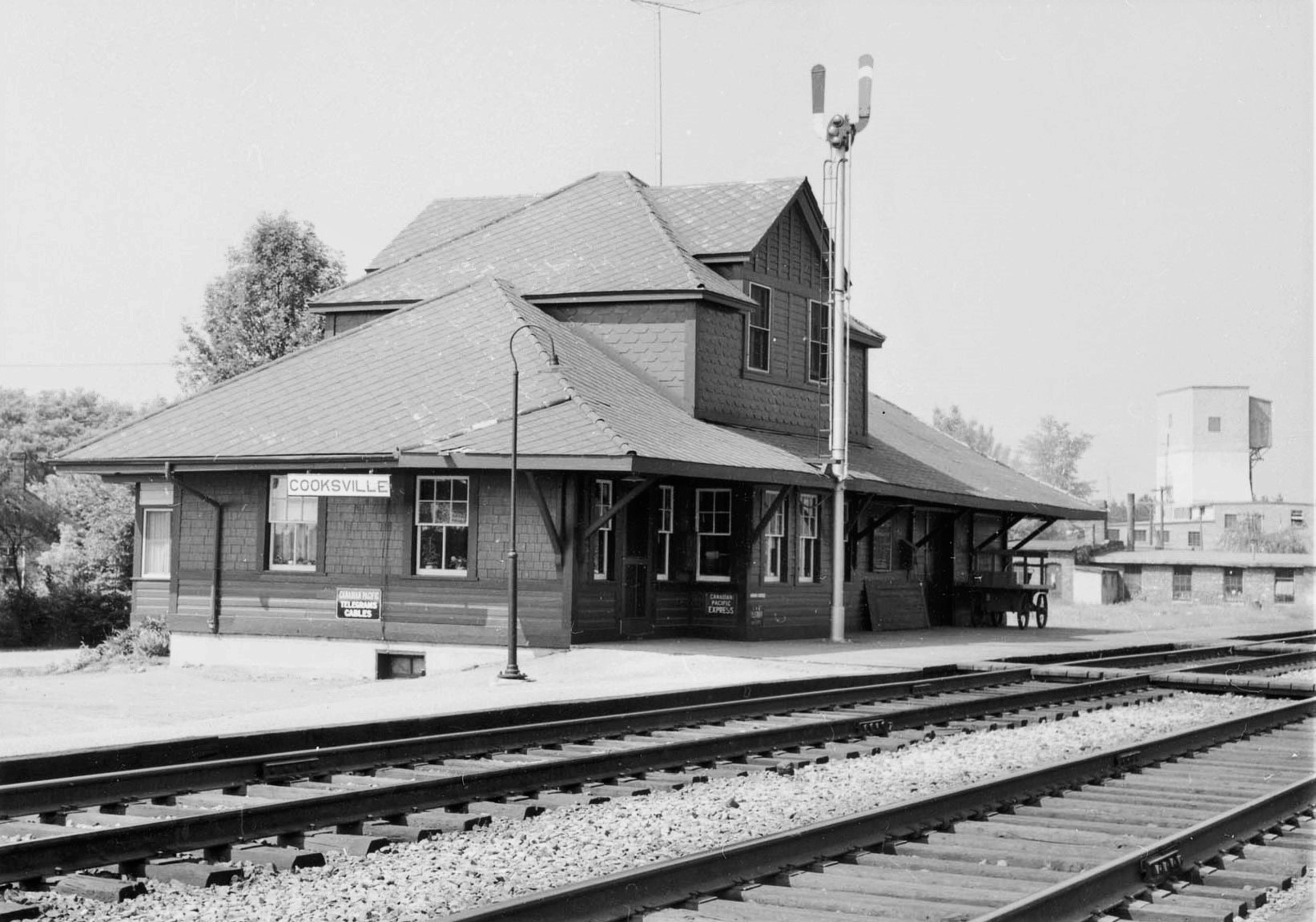
Significant changes came to Cooksville under Canadian Pacific, particularly in the early 20th century. The entire CPR mainline from Montreal to Guelph Junction was double-tracked during this period, which included the line through Cooksville. The double track project made it to Cooksville in late 1912, coinciding with the replacement of Cooksville Station with a CPR standard “no. 5” passenger station. The replacement was much larger than its predecessor, having a second floor containing the station agent’s living quarters. The lower floor held the waiting room, baggage room, and the station agent’s office. Train frequency increased greatly into the early 20th century, reaching a staggering 20 trains stopping at Cooksville per day by 1921.
Shortly thereafter, the popularization of automobiles began to negatively impact passenger ridership. This phenomena was intensified by the completion of a four-lane divided highway in 1939, now known as the Queen Elizabeth Way between Toronto and Hamilton approximately 1.8 kilometers south of Cooksville Station. Similar effects were felt after the completion of Highway 401 and Highway 403 north of Cooksville between 1959 and 1963. Service to Cooksville would drop to 15 trains per day by 1961, and it would end altogether within the next couple of years. The station remained in use as a train order office until it was closed entirely in 1973. After sitting abandoned for some time, local efforts to preserve the station grew but failed to coalesce. The station was torn down in October 1975 and the property has since been turned into industrial space.
After its formation in 1967, GO Transit made attempts to provide commuter service to the Cooksville area but these were met with resistance from Canadian Pacific who continued to use the rail line for freight traffic. After a derailment incident involving hazardous material known as the Mississauga Miracle occurred 3.7 kilometers to the west of the former Cooksville Station site in 1979, Canadian Pacific was forced to allow GO Transit to operate through the area in exchange for not being sued by the City of Mississauga. The Cooksville GO Station was built approximately two kilometers west of the original station site in 1981, bringing passenger rail back to Cooksville for the first time in nearly 20 years.
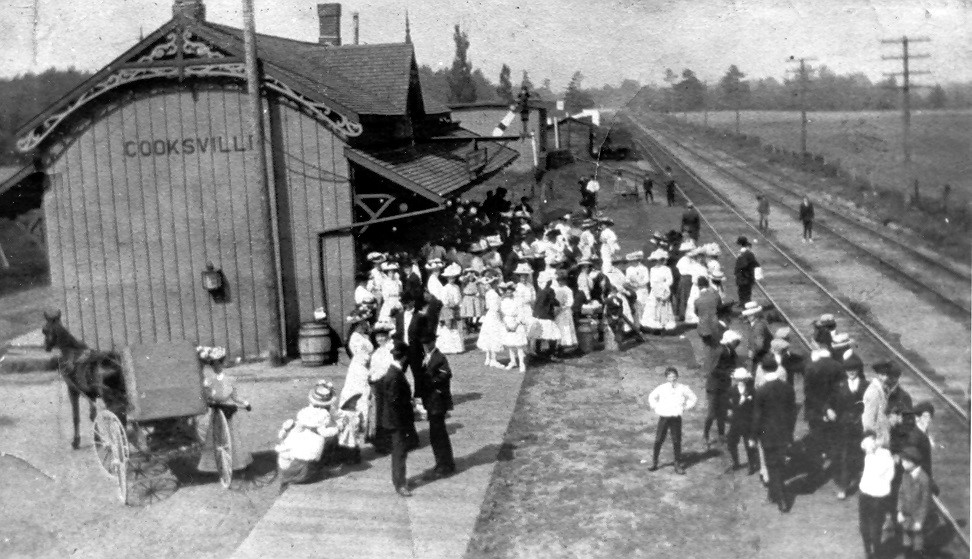
A circa 1908 photograph of the second Cooksville Station. Note the Canadian Pacific-era lower quadrant semaphores fixed to the station above the canopy. Courtesy of the Mississauga Library System. 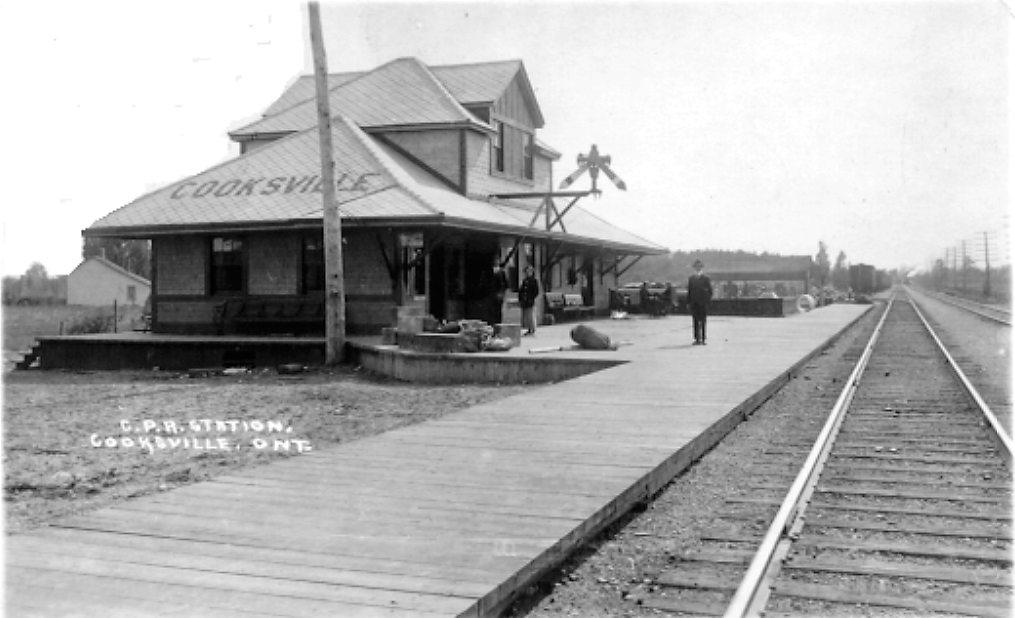
An early 1900’s postcard of the new Cooksville station, showing its original wooden platform. Courtesy of Heritage Mississauga. 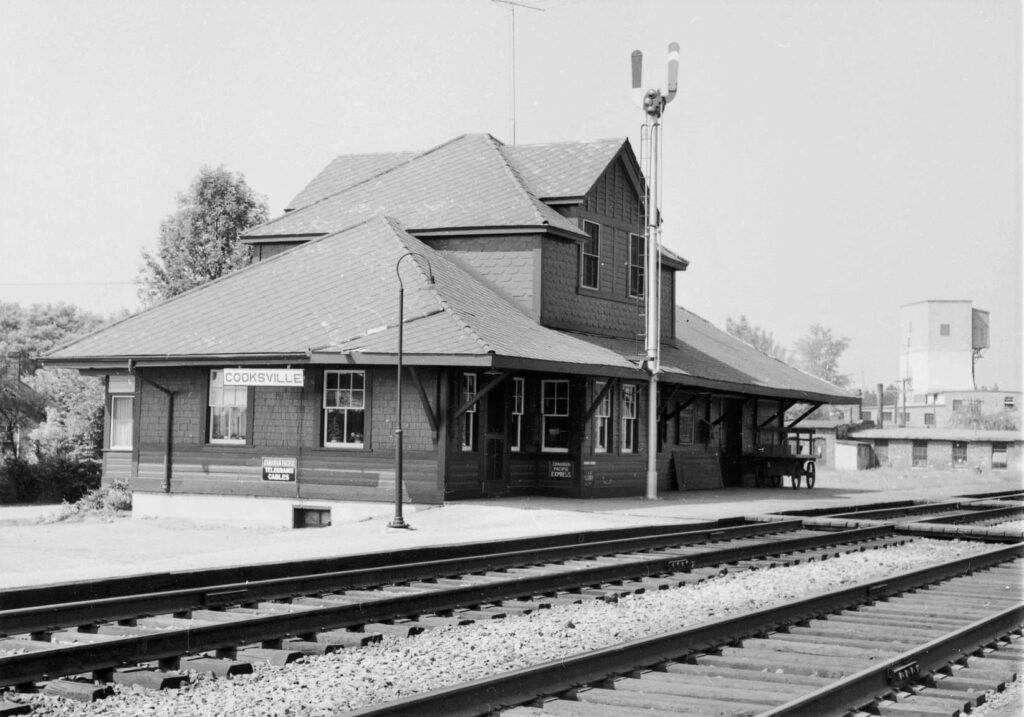
The station wears a new coat of red paint by the time of this 1955 photo, and a concrete platform has replaced the wooden one. Courtesy of the Toronto Public Library. 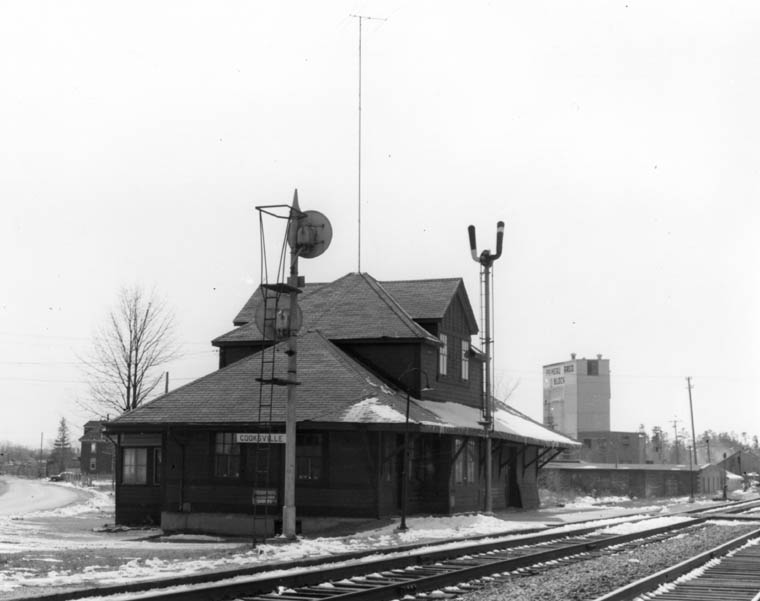
By the time this 1965 photograph was taken, the platform was shortened on either end of the station and a new “searchlight” signal has appeared in the foreground. Courtesy of the Al Paterson Collection. 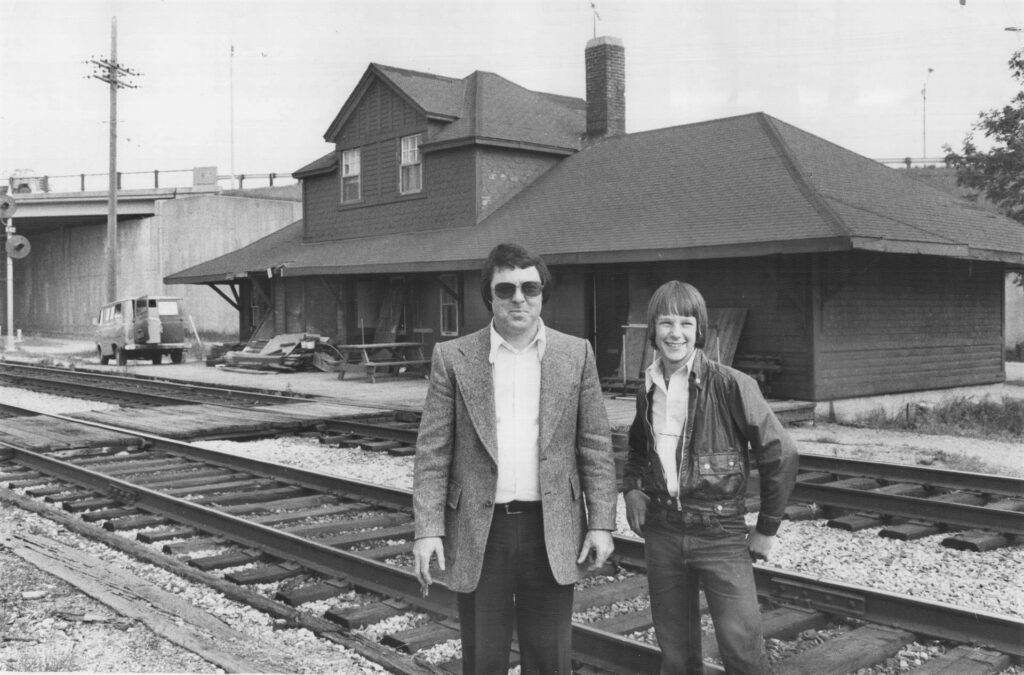
This photo of the station is from a 1975 Toronto Star article. The article talks about local grocery store manager Lorne Heslip (left) and his son (right) who are living in the station with the hopes that it will be preserved. Unfortunately, it wasn’t enough to save the station as it was demolished in October of that year. Courtesy of the Toronto Public Library.
Condensed Station Info:
| Location: | Served By: | Current State: | Date Built: | Date Demolished/Burned: |
| Dundas Street East | Credit Valley (1878 – 1883) Canadian Pacific (1883 – 1962) | Demolished | 1878 (First) 1883 (Second) 1914 (Third) | 1883 (First) 1912 (Second) 1975 (Third) |